Optimizing identity documents classification in online systems: A comparative analysis
Published in IJDAR, 2025
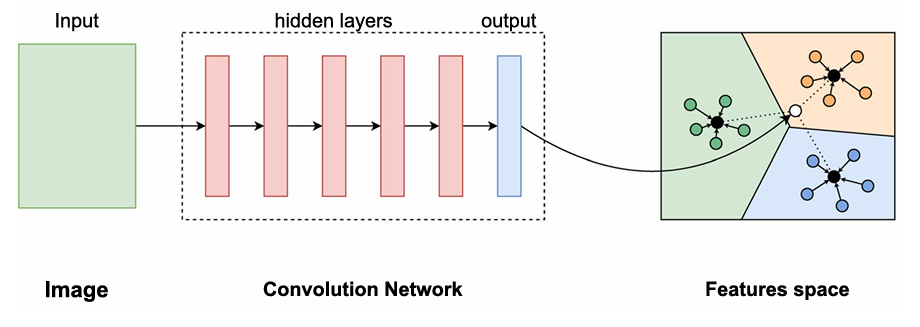
Nowadays, administration and other bank business interactions are increasingly carried out with online systems. One main problem with this type of interaction is verifying the user’s identity to prevent usurpation. This article focuses on the initial classification process of these systems, mainly smartphone applications for identity document (ID) check. Indeed, these systems need a classification as a pre-processing to identify the type of document and adapt the security element verification accordingly. The context includes some constraints such as limited computing resources and processing speed requirements. There are also some advantages: The documents supposed to be found are known a priori and ID is a highly standardized type of document. To perform this document image classification, this article compares multiple solutions and proposes our improvement to match these challenges and then discusses which could be the best solution in which situation. These solutions include convolutional deep neural networks (CNN), prototypical networks (ProtoNet), and reduced descriptor matchers (RDM). The evaluation shows that the prototypical network and the best-reduced descriptor matcher method have close results, but different weaknesses. CNN clearly outperforms ProtoNet and RDM in terms of accuracy, but ProtoNet is on par in terms of computing speed. RDM’s weaknesses make it unsuitable for our context and CNN need too many training samples to be used efficiently. As a result, improving ProtoNet seems to be the best option.